
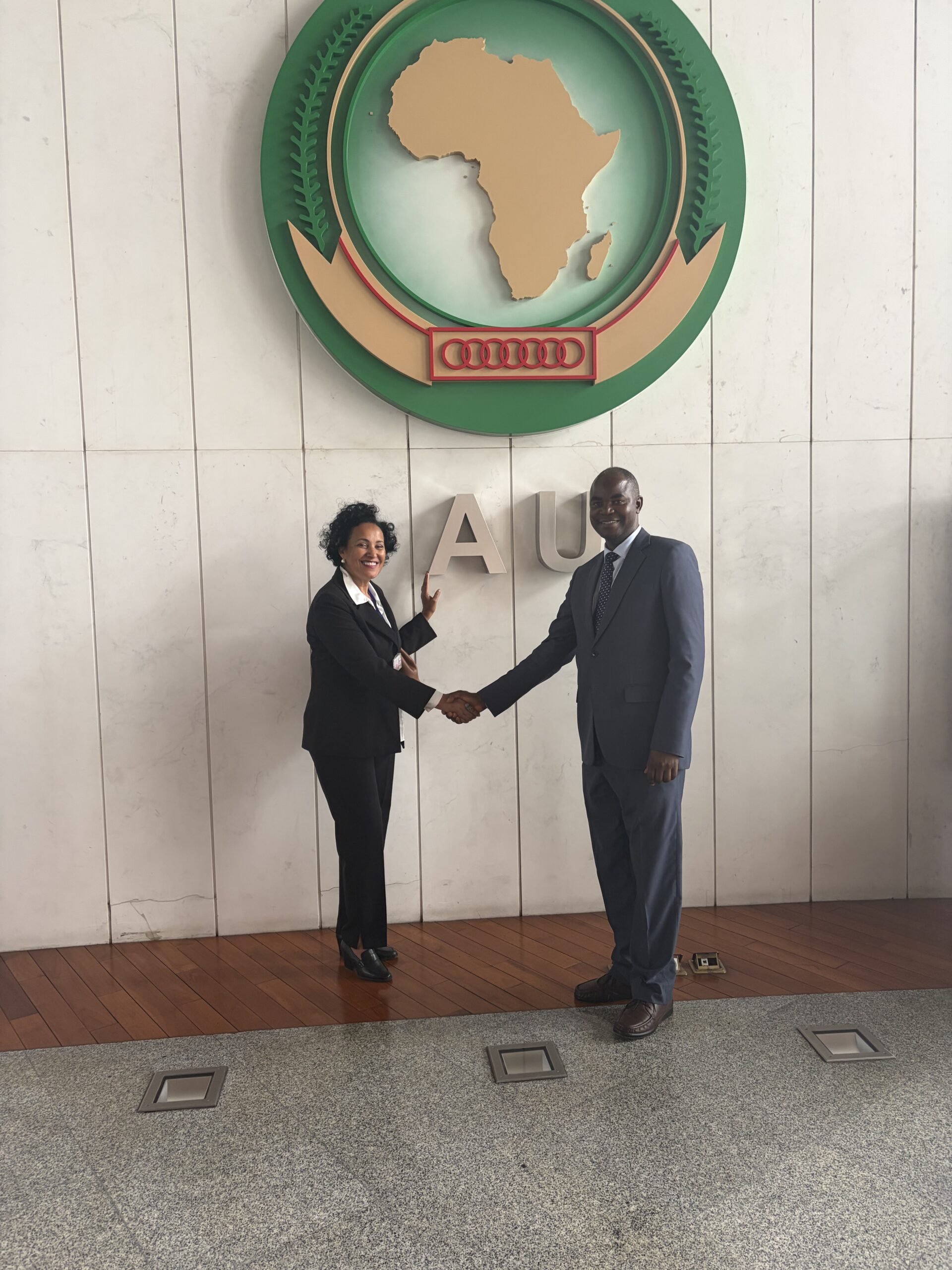
The collaboration between the African Union and the African Coalition is grounded in a shared commitment to addressing the growing global substance abuse crisis through coordinated, transnational prevention and response strategies.
The United States continues to face a severe drug overdose crisis, with annual deaths exceeding 100,000, largely driven by synthetic opioids. According to the U.S. Centers for Disease Control and Prevention (CDC), this public health emergency remains one of the most pressing challenges in the country. At the same time, the U.S. Drug Enforcement Administration’s National Drug Threat Assessment (DEA NDTA 2025) highlights the increasing sophistication of transnational criminal organizations, which have diversified trafficking routes and continue to exploit commercial aviation corridors as well as vulnerable populations.
In this context, the African diaspora, comprising more than 2.1 million African-born individuals in the United States, as reported by the U.S. Census Bureau, represents a strategically important bridge population connecting the United States and Africa. This transnational linkage underscores the need for culturally responsive, globally coordinated prevention strategies.
Sources: CDC; U.S. Census Bureau; DEA NDTA 2025
https://www.cdc.gov/overdose/data/index.html
https://www.census.gov/topics/population/foreign-born/data.html
https://www.dea.gov/documents/2025/01/15/2025-national-drug-threat-assessment

Strategic Importance of the African Cultural and Wellbeing Summit
The African Cultural and Wellbeing Summit hosted in the United States is not symbolic; it is strategically necessary. Drug trafficking and substance misuse are inherently transnational challenges, and therefore prevention efforts must also be transnational in scope. The summit provides a structured platform for integrating public health systems, civil society, law enforcement agencies, policymakers, diaspora leadership, researchers, and multilateral institutions.
The annual summit is designed to:
- Establish ethical and accountable collaboration frameworks between diaspora communities and public safety agencies
- Develop coordinated early-warning and response systems
- Share best practices in culturally responsive prevention, treatment, and recovery approaches
- Align strategies between the United States and the African Union
- Mobilize diaspora professionals as structured prevention partners
- Strengthen intelligence-informed prevention while safeguarding civil rights and community trust
- Create scalable and replicable models for implementation across other immigrant and diaspora communities
In addition, the summit operationalizes bilateral and multilateral cooperation by linking U.S. federal and local agencies with the African Union Commission, the Africa CDC, Ministries of Health and Justice across African nations, and diaspora-led organizations into a unified prevention and response framework.
Sources:
https://www.unodc.org/unodc/en/data-and-analysis/world-drug-report-2025.html
https://www.state.gov/global-health-strategy/
https://au.int/en/agenda2063/overview
Asset-Based Community Development (ABCD) Framework
The African Coalition applies the Asset-Based Community Development (ABCD) framework as the sustainability engine of this initiative. Rather than viewing diaspora communities as passive beneficiaries or solely at-risk populations, ABCD begins by identifying and mobilizing existing community assets.
These assets include professional expertise, faith-based institutions, youth leadership, business associations, academic scholars, legal advocates, healthcare providers, cultural organizations, and transnational networks.
ABCD operates through five core pillars:
- Asset Mapping and Mobilization
- Community Ownership and Leadership
- Strategic Partnership Leveraging
- Sustainable Financing Structures
- Continuous Learning, Monitoring, and Evaluation
Through this framework, diaspora communities are positioned as co-designers and implementers of prevention solutions. This includes peer-led prevention campaigns, culturally grounded education initiatives, early-warning reporting systems, youth engagement programs, and structured referral pathways for treatment and recovery support.
Importantly, ABCD strengthens long-term sustainability by embedding prevention efforts within existing community institutions, reducing dependency on short-term grant cycles, and reinforcing transcontinental partnerships between Africa and the diaspora.
